Blog / Bids and profit
ACoS formula: what is ACoS on Amazon and how to calculate it
Your campaign shows 28% ACoS. Good or bad? The ACoS formula is one line of maths, but the number only means something next to your margin. Here's the formula, then how to read it.
Updated 2026-11-27
The short answer
The ACoS formula is ad spend divided by ad sales, times 100. Spend Rs 500 on ads that bring Rs 2,000 of sales and your ACoS is 25%. ACoS means advertising cost of sales: the share of ad-driven revenue that went back into ads. Lower is cheaper, but the right level depends on your profit margin.
The ACoS formula
Amazon writes it as "ACOS = (ad spend / ad revenue) x 100" in its Amazon Ads guide to ACOS (read 27 November 2026). Ad revenue here means sales Amazon attributes to your ads, not all your sales.
- Take ad spend for the period from the campaign report.
- Take attributed sales for the same period.
- Divide spend by sales and multiply by 100.
Example, with illustrative numbers: Rs 500 spend and Rs 2,000 ad sales gives 500 / 2,000 x 100 = 25%. You can skip the arithmetic with the free ACoS calculator. Short definition: ACoS in our glossary.
ACoS vs TACoS vs ROAS
| Metric | Formula | Tells you |
|---|---|---|
| ACoS | Ad spend / ad sales x 100 | What share of ad sales went on ads |
| ROAS | Ad sales / ad spend | Sales per rupee of ad spend; the inverse of ACoS |
| TACoS | Ad spend / total sales x 100 | Ad spend against all sales, ads plus organic |
ACoS and ROAS from Amazon Ads guides (ACOS guide and ROAS guide, read 27 November 2026). TACoS is a seller term; Amazon's ACOS guide doesn't define it.
With the example above, ROAS is 2,000 / 500 = 4. A 25% ACoS and a ROAS of 4 are the same result written two ways. TACoS adds organic sales to the bottom line, so it shows whether ads are helping the whole account grow. More in the glossary: TACoS and ROAS.
Break-even ACoS, worked example
Amazon's guide says "Break-even ACOS is directly linked to your profit margin." Break-even ACoS is your profit per sale before ad spend, as a share of the price. Spend more than that on ads and the sale loses money.
| Example line (illustrative numbers) | Amount |
|---|---|
| Selling price | Rs 1,000 |
| Product cost | Rs 450 |
| Amazon fees and shipping | Rs 250 |
| Profit before ads | Rs 300 |
| Break-even ACoS | 300 / 1,000 = 30% |
Made-up numbers to show the method. Use your own costs and current Amazon fees.
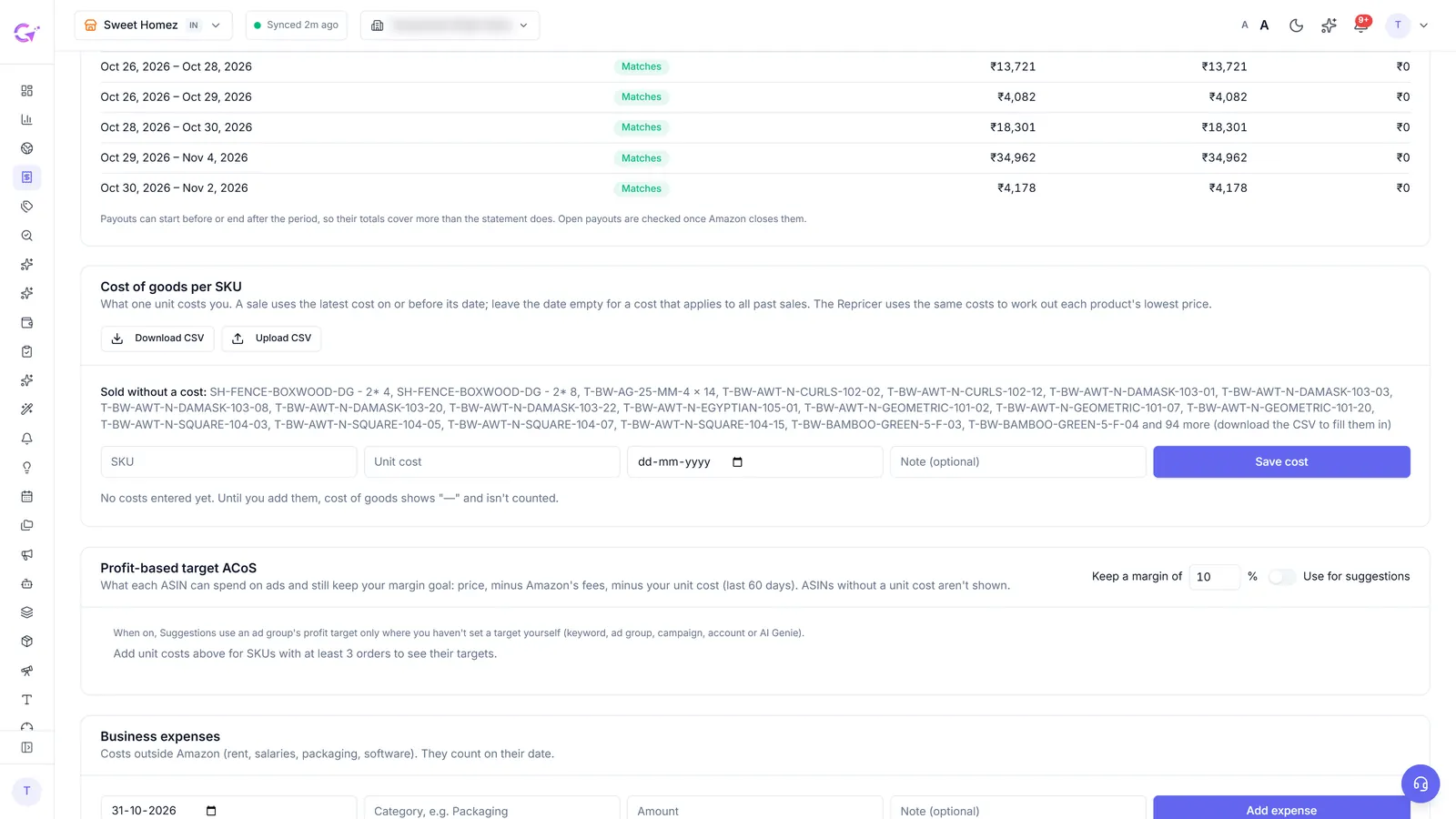
In this example a 28% ACoS still makes Rs 20 a sale; 35% loses Rs 50. Your target sits below break-even by however much profit you want to keep. How to set a profit-based target ACoS goes further, and the profit calculator gives your margin per SKU.
How to lower ACoS without starving sales
- Block search terms that take clicks and never sell. Find and block wasted search terms shows how.
- Bid by margin: products with more room above break-even can bid higher.
- Pause ads on products that lost the Buy Box or are out of stock.
- Judge changes after the data settles, and keep a record you can roll back.
Two accounts we can point to: Sweet Homez, a home and kitchen brand (our own), went from 38% to 12.5% ACoS over 2 months, and Golden Cart, a multi-brand seller we know, went from 45% to 31.5% over 3 months. Numbers from the sellers' own Amazon Ads accounts.
Questions people ask
What is ACoS on Amazon?
Advertising cost of sales: ad spend as a percentage of the sales Amazon attributes to those ads.
How do you calculate ACoS?
Divide ad spend by ad sales and multiply by 100. Rs 500 spend on Rs 2,000 sales is 25%.
What is a good ACoS on Amazon?
One below your break-even ACoS, which equals your profit margin before ads. Amazon says each brand has a different target.
What is the difference between ACoS and TACoS?
ACoS divides ad spend by ad sales. TACoS divides ad spend by total sales, including organic.
Is ROAS the same as ACoS?
They measure the same result. ROAS is ad sales divided by ad spend, the inverse of ACoS.
Check it in your own account
See pricing · Get a free PPC audit · Start a 14-day free trial